
Taking a Closer Look at Ferragamo’s Crisp-Lined vs Softly-Draped Bag Styles
Over the course of decades, Salvatore Ferragamo has perfected the language of Italian leather goods, and this mastery shows through most clearly in the tension between two opposing design philosophies: the precise, architectural shaping of structured styles set against the loose, casual comfort of slouchy shapes.
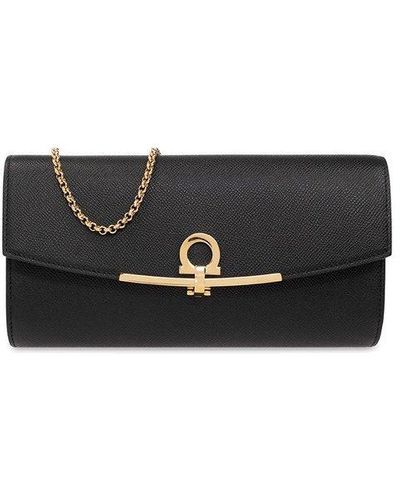
Anyone who looks through a Ferragamo shop today will notice that the house doesn’t pick a side; instead, it develops two accessory lines that run in tandem—one rooted in architecture, the other in movement.
Knowing the difference is important if you’re trying to choose a piece that will genuinely justify its place in daily rotation rather than remain tucked away unused.
Far from a superficial trait, this difference runs deeper. Bags with a structured build are engineered with internal frames, firmed-up panels, and meticulous seams to hold a fixed shape regardless of how much you pack into them. By contrast, softer, unstructured styles are built from gentler, pliant materials and a more relaxed build, causing it to shift shape depending on how you tote it. Both approaches show up across the current Ferragamo bags collection, and each has devoted fans for reasons that couldn’t be more different. Unpacking what distinguishes one from the other, where the technique splits, and which styles from the brand’s present lineup favor each approach is the goal of this article.
Construction Vocabulary—The Thing “Structured” Really Signifies
An architecturally built Ferragamo bag usually opens with a stiff foundation, often reinforced with a firm board or thick foam layer sewn between two layers ferragamo bags of leather. As a result, the bag stays perfectly upright on a table, resisting any lean or collapse. The Ferragamo Studio bag is the clearest example in the current range: its boxy silhouette, sharp corners, and top handle depend entirely on this internal architecture. Take away the structural support, and the leather would lose its shape entirely, falling flat.
For structured silhouettes, hardware is more consequential than one might anticipate. Frames, turn-locks, and handle attachments alike all depend on a unyielding body to be mounted on, since soft leather alone isn’t able to withstand ongoing pressure at a concentrated area without warping or ripping over time. Structured bags from Salvatore Ferragamo tend to feature more substantial closures for this reason, while slouchy styles rely more on zips or magnetic snaps that don’t require the same structural support.
Leather selection is different as well. Structured pieces for the most part use full-grain or lightly corrected hides that keep a crisp crease precisely where it’s cut, producing an edge that feels crisp and nearly sculptural. Structured bags therefore photograph with such consistency for this reason — the shape doesn’t shift between shots, which matters for a Ferragamo shop trying to represent a product accurately online. What you give up is lower weight; on average, structured bags outweigh their slouchier counterparts owing to the reinforcement built inside them.
Finally, bags with a defined structure tend to hold their resale value more steadily. Since the shape doesn’t deteriorate the way a softer hide can droop or gather creases with time, a structured Salvatore piece acquired at this point is more apt to still look polished in five years with simple maintenance. This is a practical consideration for anyone treating a Ferragamo bag as a durable, long-range purchase rather than a seasonal purchase.
Ease, Plushness, and Everyday Usefulness: The Case for a Relaxed Silhouette
Stiffness gets traded for ease in slouchy bags, and this exchange brings tangible advantages. A softer hide, often napa leather or a faintly textured calf leather, flexes in sync with the body rather than fighting it, which explains why relaxed hobo and shoulder silhouettes stay in demand for the daily commute. The Ferragamo Wanda, in its softer iterations, exemplifies this — it grows roomier without ever appearing overloaded, as the leather is designed to give rather than resist.
A relaxed, unstructured build likewise shifts the way heft is spread out. Because there is reduced internal support and reinforcing components, these bags are frequently less weighty, which matters over an eight-hour workday when a bag stays balanced on a single shoulder. Because they compress slightly to fit into carry-on luggage without holding a fixed, space-consuming shape, shoppers looking into the best Ferragamo bags for travel tend to choose relaxed, unstructured designs.
The design-related case also plays a role. Relaxed, unstructured bags read as more casual and less overtly “logo-forward,” which is ideal for buyers who want their Salvatore Ferragamo bags to sit quietly within everyday outfits rather than call attention to themselves. That loose, easy drape pairs especially well with denim, tailored trousers, and other looks where a stiff, boxy accessory would clash visually with the rest of the outfit.
One thing worth noting is a longevity factor worth addressing candidly. Softer leather hides is more prone to surface creasing and wrinkled texture over the course of ownership, above all when it’s frequently stored without stuffing or stored improperly. None of this implies it wears out faster from a build-quality standpoint, but the appearance will evolve more visibly than a firmer-bodied bag. People who’d like a slouchy bag to look nearly new after extended years in rotation need to take extra care in stuffing it with tissue paper during storage.
A Side-by-Side Breakdown of Both Methods
To make the distinction concrete, it helps to see how rigid and relaxed Ferragamo bags tend to measure up across the factors that matter most to a real buyer: shape retention, weight, everyday flexibility, and how they age.
| Point of comparison | Tailored-Shape Styles | Slouchy Styles |
|---|---|---|
| Shape retention | Keeps a unchanging form no matter contents | Form adapts depending on what’s inside and how it’s carried |
| Typical weight | Heavier due to internal reinforcement | Lighter, easier for all-day wear |
| Best use case | Professional settings, formal events, minimalist wardrobes | Travel, casual daily use, layered outfits |
| How it wears over time | Retains sharp edges across years of wear | Develops relaxed folds; character-driven patina |
| Metal detailing | Bolder clasps, structural frames, and fastenings | More understated zippers or magnetic snaps |
| Upkeep requirements | Barely any — structure needs no help | Requires stuffing to prevent permanent creasing |
Superiority here isn’t the point; instead, the better fit comes down to real-world daily use. Consistency makes structured bags a strong match for car commuters in formal offices, whereas frequent travelers and transit users may prefer the reduced fatigue slouchy bags offer over time.
Interpreting the Current Ferragamo Bags Overview by Category
Surveying the current Ferragamo bags overview, the brand structures its lineup roughly into three functional tiers: structured top-handle styles for formal or office use, crossbody and shoulder styles that balance structure and softness, and loose, hobo-inspired bags made for volume and comfort. This layered structure means a buyer can move between categories based on what’s needed without fully exiting the brand’s range.
Ferragamo’s tailoring heritage shows up most strongly in top-handle styles. Crisp lines, symmetrical stitching, and hardware matched precisely to the leather tone often mirror the exactness of Ferragamo’s shoes. That’s why, these bags frequently top any shortlist of the best Ferragamo bags for professional settings, given how consistently the shape holds across desks and meeting rooms.
Crossbody styles sit in the in-between space and are perhaps the most versatile in the present collection. They typically use a construction that’s firm yet flexible: sturdy enough to keep its form worn close in, but with sufficient flexibility in the strap and sides to keep from appearing rigid. This category is frequently cited among the top Ferragamo bags for buyers who want one bag that photographs well and also survives a full day of errands.
Filling in the lineup are soft-form hobo and tote designs, the group where softer leather choices matter most. With expansive panels and reduced seaming, structural rigidity drops while the hide’s quality is showcased, as minimal stitching keeps focus on the leather. Shoppers weighing top Salvatore Ferragamo pieces by tier will likely find this softer tier leads in comfort but falls behind in formal-occasion versatility.
How to Choose Between the Two for Real-World Use
The most sensible approach to decide is to take stock of your own week instead of your wish list. Note how often you’re desk-bound compared with being on the move, and be honest about whether you’re someone who clears out their bag every evening or keeps it packed for weeks at a stretch. Steady habits and foreseeable wear are what structured bags reward, while flexibility and forgiveness of erratic habits are the strengths of slouchy bags.
Budget, too, has an indirect bearing on the choice. Given that structured bags need more components — inner reinforcement, structural lining, reinforced hardware mounts, carefully cut panels — manufacturing them typically takes more work hours, which can be seen in how comparable sizes are priced by a Ferragamo shop across both categories. This isn’t a hard rule, but it’s something worth being aware of if price weighs into the decision alongside style.
Regional climate and everyday habits matter more than most buyers expect. Where humidity runs high, relaxed slouchy hides can absorb more moisture and need more upkeep, while structured bags with finished or sealed leather sections tend to hold up somewhat better against the elements. Those buying ferragamo bags for use across changing seasons and climates ought to consider this rather than choosing purely on appearance.
Ultimately, many Ferragamo owners end up with one of each — a structured piece for anything formal or unpredictable, and a soft-shaped bag for daily routines that face no real scrutiny. This combination mirrors the way the brand approaches its own collections: not as a single point of view, but as two unified solutions addressing two distinct daily challenges, each carried out with an identical dedication to Italian leather craftsmanship that has shaped Salvatore Ferragamo since it was founded.